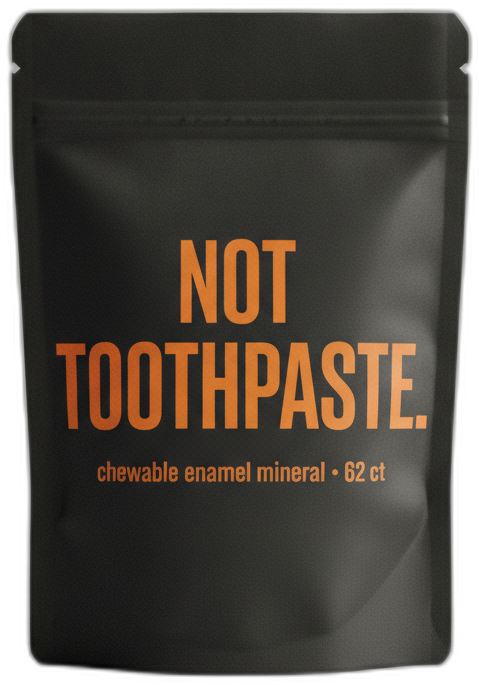
7 Signs Your Toothpaste Is Working Against You
You floss. You brush the full two minutes. You bought the expensive "sensitivity" tube, the whitening one, and the one your dentist mentioned in passing.
Your mouth keeps getting worse. The sores come back on the same spot, the cold water still stings, and something peels off the inside of your cheek that you have no name for.
You did the work, and that is what makes this maddening. Every article says the same five things: brush twice a day, floss, cut the sugar, swap your brush, see the dentist. You followed the list to the letter.
The payoff was supposed to be a mouth that stops hurting. What you got instead is a cabinet full of half-used tubes and a tongue that keeps finding raw patches it did not have last year.
Here is the part nobody prints on the box. The problem may sit inside the tube.
A handful of ingredients in standard toothpaste do nothing to clean a single tooth. They are there to make the paste foam, taste sharp enough to read as "clean," and glow white on a store shelf. Those same ingredients irritate a lot of mouths.
When the product is the thing hurting you, brushing harder feeds the fire. You can follow every instruction a dentist gives and still lose, because the one variable you never questioned is the paste itself.
Run through these seven signs. If three or more describe your bathroom sink, your toothpaste belongs on the list of suspects.
Your Mouth Burns Or Tingles While You Brush
Toothpaste should not sting. That warm, prickly burn that spreads across your gums and the sides of your tongue comes from SLS (sodium lauryl sulfate), a foaming detergent.
It belongs to the same family of surfactants used to lather shampoo, body wash, and floor cleaner. In your mouth it has one job: bubbles. It cleans nothing off your teeth.
The burn fools people because it arrives wrapped in mint and foam, so it reads as proof the paste is working. You may have brushed through a stinging mouth for years and called it normal, the tax you pay for a clean feeling.
What you were feeling was a detergent your soft tissue reacts to, morning and night, whether or not you scrub hard.
SLS strips the thin fatty film that coats and protects the lining of your mouth. With that film gone, your nerve endings sit closer to the surface for a few hours, so ordinary mint and cinnamon read as heat. You feel the sting because your raw tissue is reacting to the detergent, not because your teeth got cleaner.
You Keep Getting Canker Sores
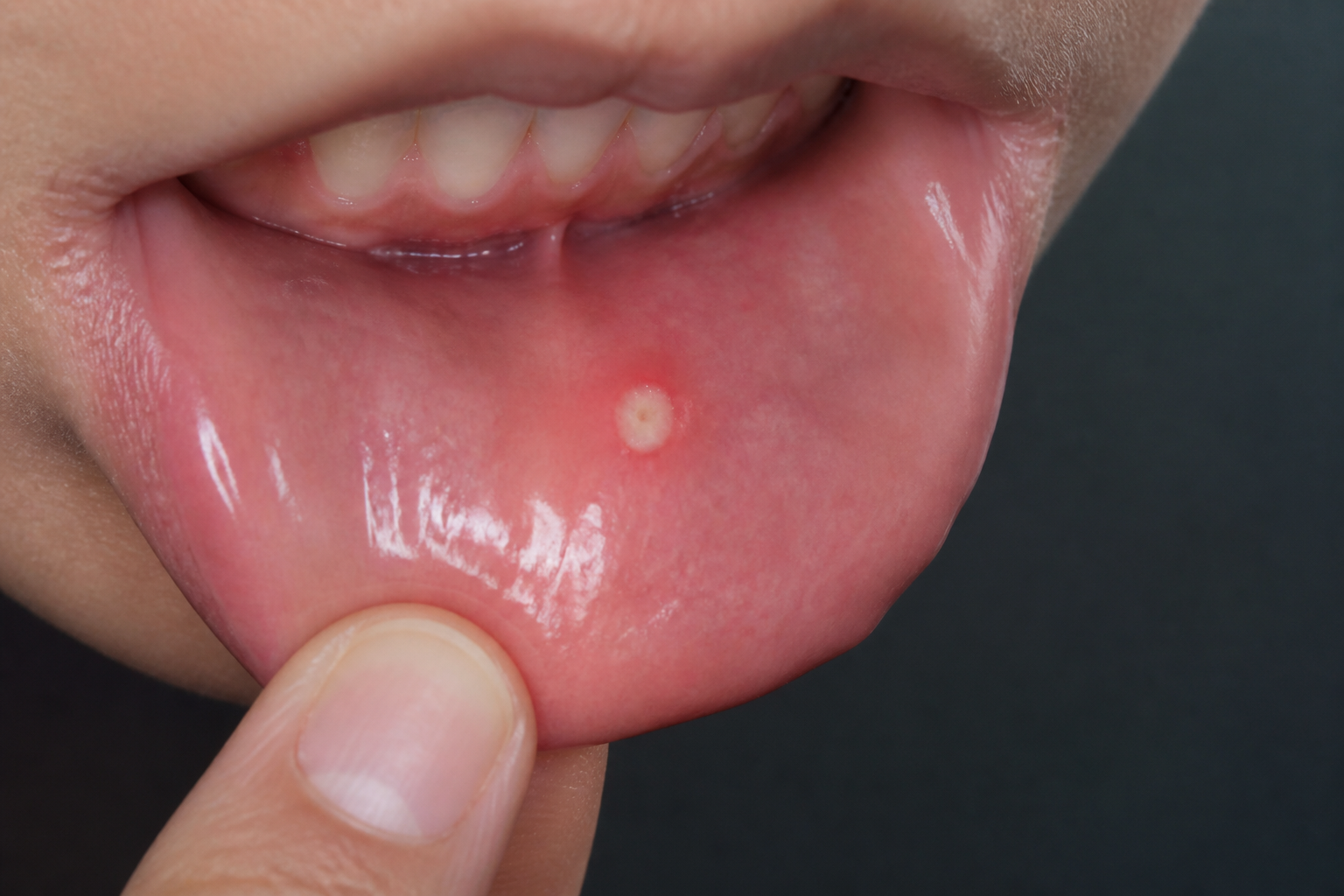
Recurring canker sores are one of the most documented reactions to SLS. The detergent strips a thin protective layer off the soft tissue inside your mouth, and the exposed surface underneath is where those white-centered ulcers open up.
They tend to land on the same spots on a loop: the inside of a lip, the edge of the tongue, the pocket of a cheek where the paste pools.
For a lot of people the pattern hides in plain sight. A sore heals over a week or two, you get a clear stretch, then a fresh one opens. The brushing you do to protect your mouth keeps feeding it the irritant twice a day.
Clinical studies that moved people to an SLS-free paste counted fewer sores and milder ones. People who had them for years call the switch the first real break they can remember.
The layer SLS removes is the barrier that keeps everyday friction and food acids off the raw tissue underneath. Strip that barrier on a schedule and small nicks that would heal on their own open into full ulcers instead. Your mouth never gets the quiet stretch it needs to close them.
The Tube Tells You To Call Poison Control
Turn your fluoride toothpaste over and read the Drug Facts panel. Every fluoride tube sold in the United States carries the same FDA-required warning: if a child swallows more than the amount used for brushing, contact Poison Control.
That warning is real, and it is federal law. It sits on the box because fluoride is an active drug at a dose, and a whole tube holds more than a small child should ever swallow.
This is not a conspiracy, and fluoride is not poison. An adult who brushes and spits is not the person the label is written for.
The fair question is a smaller one. You put this in your mouth twice a day for decades, so it is reasonable to ask whether the benefit has to arrive with that label attached, or whether something gentler does the same daily job.
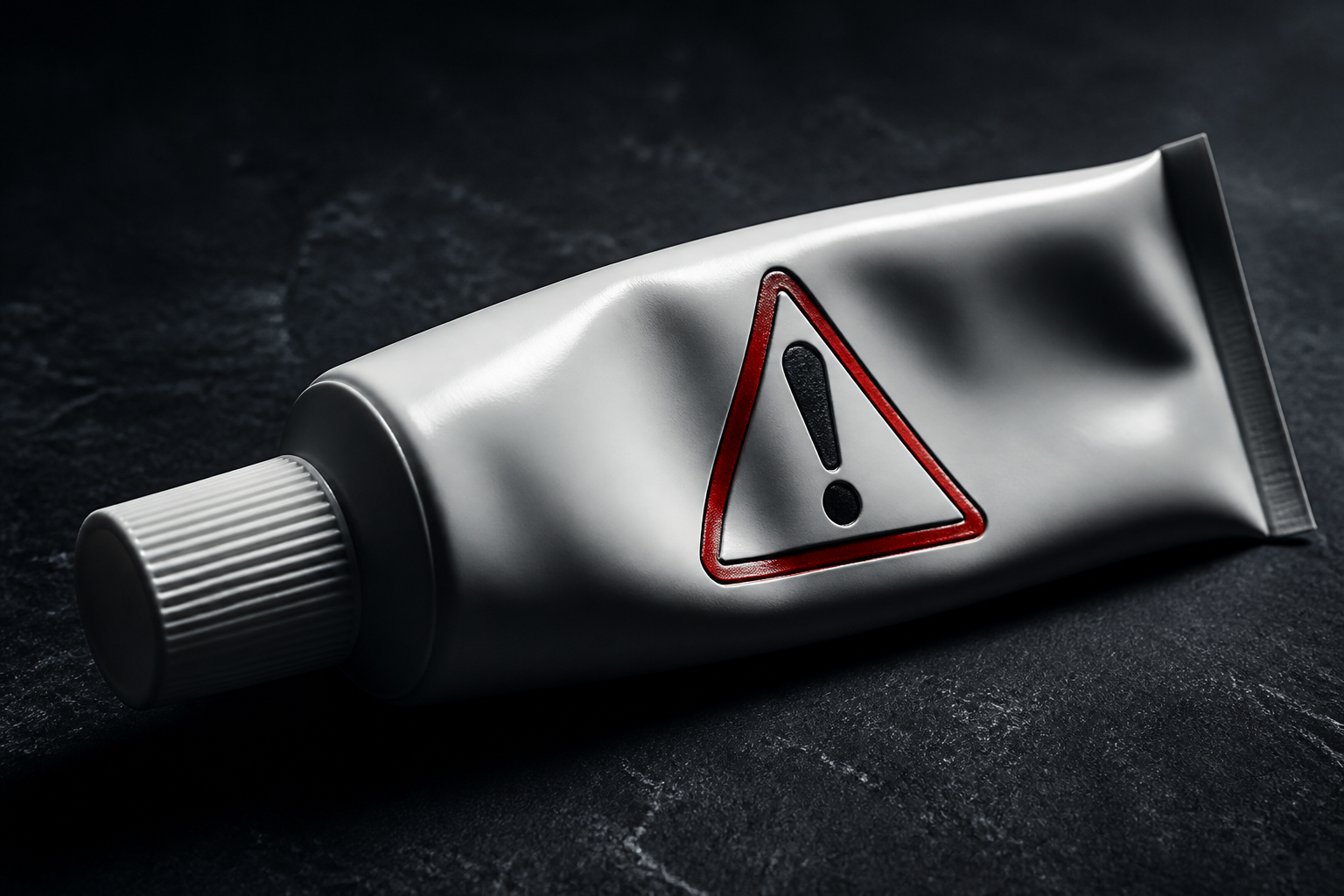
"If more than used for brushing is accidentally swallowed, get medical help or contact a Poison Control Center right away." The wording printed on standard fluoride toothpaste.
The "Sensitivity" Paste Never Fixes The Cause
You switched to the sensitivity toothpaste months ago and cold water still makes you flinch at the sink. Here is the reason.
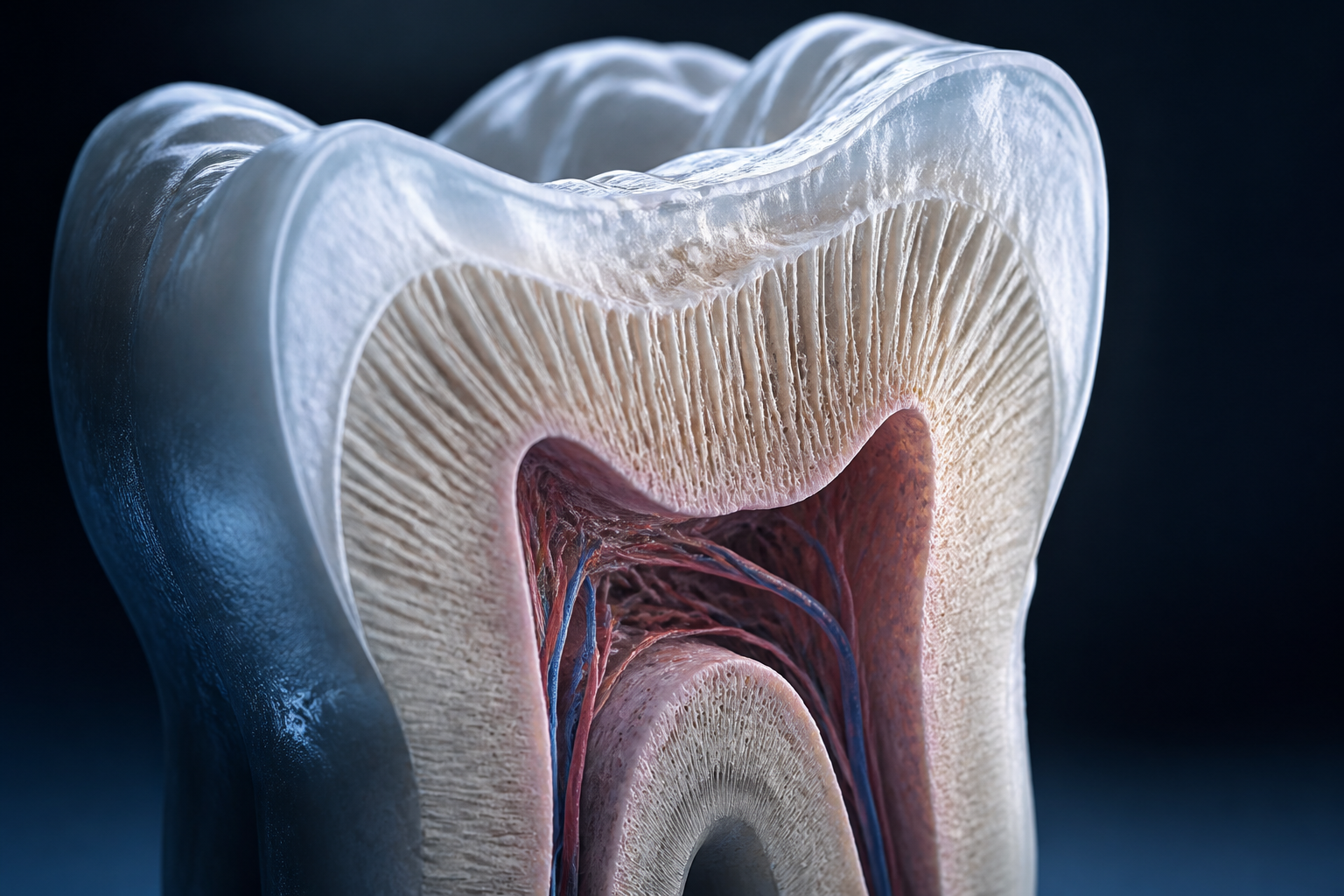
Most sensitivity pastes numb the nerve inside the tooth with a compound like potassium nitrate. They quiet the signal for a few hours, then it comes back, because nothing rebuilt the surface that let the cold reach the nerve.
Enamel wears down over years of brushing, acidic drinks, and grinding at night. That wear opens microscopic gaps in the surface and exposes the tiny channels that run down toward the nerve. Cold, heat, and sugar travel straight through those channels.
A paste that dulls the nerve leaves the channels wide open. You get a mute button you have to keep pressing twice a day for the rest of your life.
Sensitivity is a plumbing problem. Cold reaches the nerve because an open path leads straight to it. Numb the nerve and the path stays open, so the flinch comes back on schedule. Fill the path with mineral and the cold has nowhere to go, so the flinch fades because the cause is gone.
You Whiten, Then You Wince
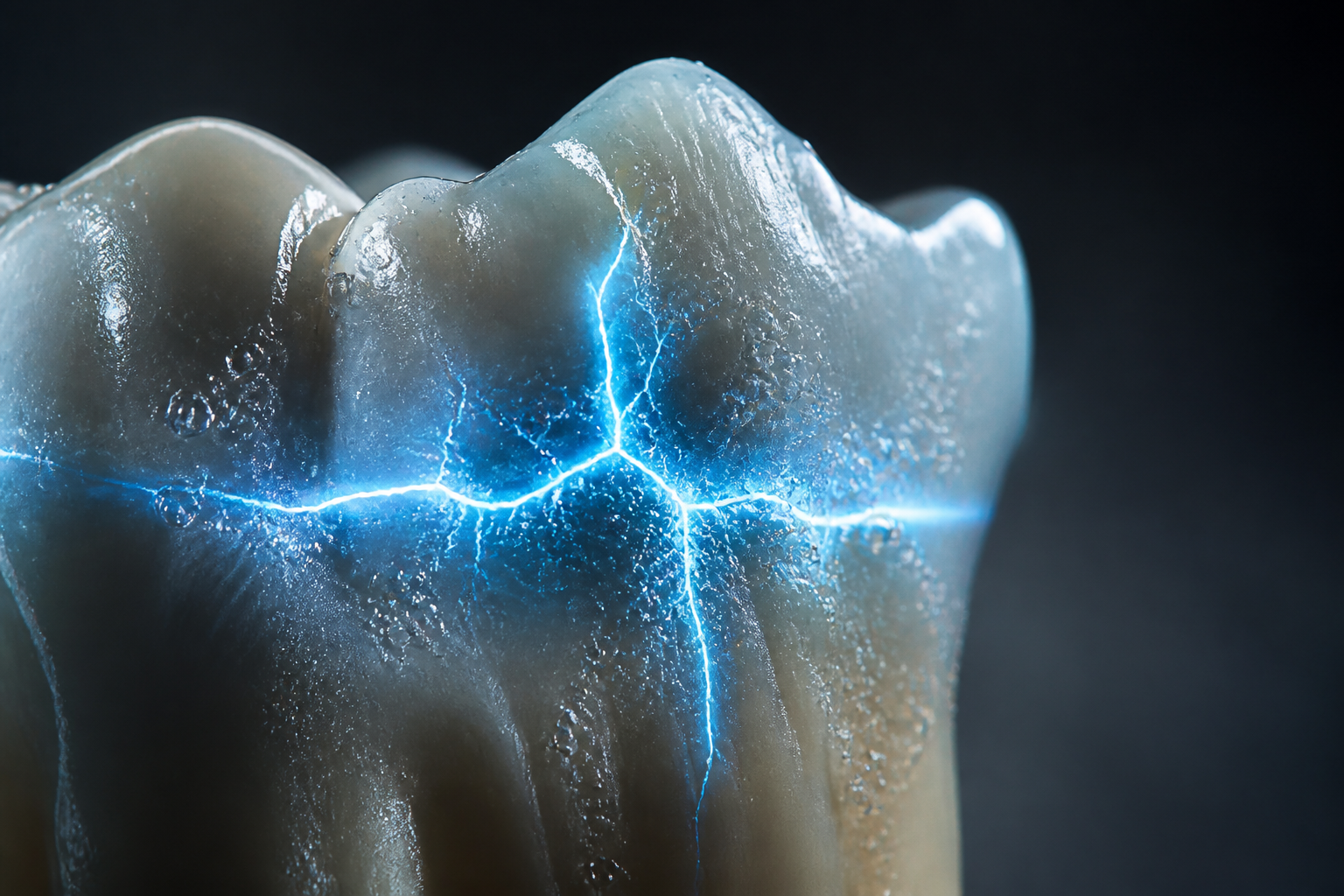
Whitening strips and peroxide pastes brighten teeth by driving a bleaching agent down into the enamel to break the stain molecules apart. That process opens the same channels to the nerve.
That is why a whitening week so often ends with sharp zingers when you sip something cold or pull winter air in through your teeth.
You trade one problem for another. Whiter for a few days, more sensitive for a few weeks.
The ache does not mean the whitening worked harder. The peroxide reached past the stain and into the living layer that feels cold and heat. If your teeth throb every time you brighten them, the method is the cause, and a stronger strip only sharpens the zing.
Peroxide is small enough to slip through enamel and reach the tissue underneath. The same open path that lets it bleach the stain lets the cold reach your nerve, so the whitening you want and the sensitivity you dread ride in together.
White Stringy Skin Peels Inside Your Cheeks
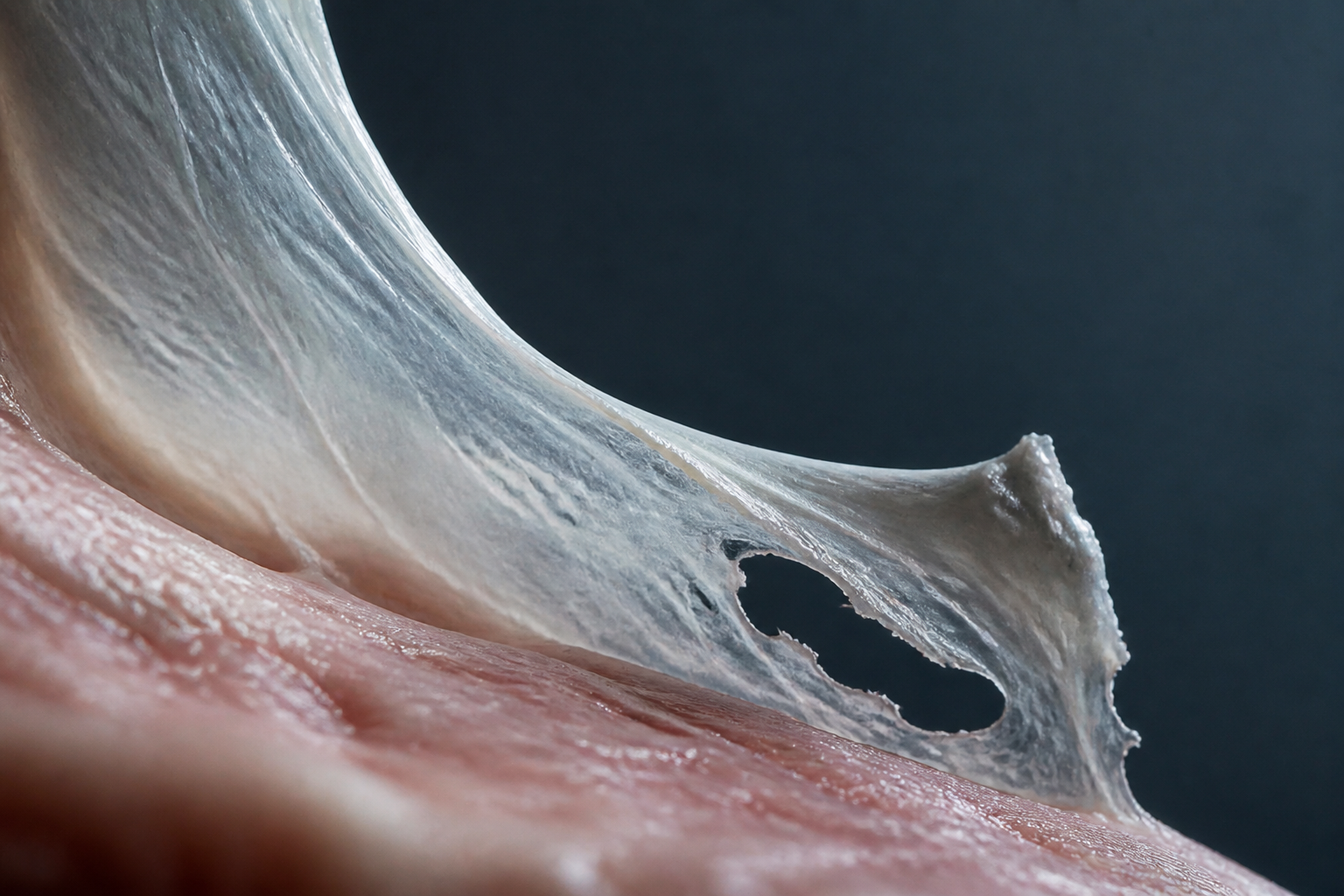
You run your tongue along the inside of your cheek an hour after brushing and it snags on loose, white, stringy skin. It looks alarming enough that people photograph it and post it to ask what went wrong.
The cause is plain. SLS sloughs the thin surface layer off the tissue that lines your mouth, and that dead layer peels away in ragged strands you can feel and see.
People describe it in the same words so often that the phrase repeats across forums almost verbatim. It looks like thrush or an infection you picked up somewhere.
What you are seeing is the detergent lifting the top layer of tissue before it is ready to shed, the same thing SLS does to any soft surface it sits on twice a day.
The lining of your mouth renews in layers. The old surface sheds as new tissue rises underneath. SLS peels that top layer early, so it comes off in visible strings instead of washing away where you never notice it. Drop the detergent and the strings go with it.
You Do Everything Right And It Gets Worse
This is the sign that ties the other six together. You brush on schedule, floss most nights, rinse, and upgrade to the pricier tube whenever the last one lets you down. The sores, the stinging, and the sensitivity climb anyway.
When you put in more work and get a worse mouth, the toothpaste is the thing you have not tested.
Think about how you would run down any other problem in your life. You change one thing at a time and watch what happens.
You already changed the brushing, the flossing, the rinsing, and the brand on the shelf, and none of it moved the needle, because every tube carried the same short list of irritants under a different label.
Switch to a toothpaste without them and you finally test the one thing you never questioned. For a lot of people, that single swap is the relief they chased for years.